
An untold Wesley story
Without the vision, courage and tenacity of a group of remarkable women, Wesley College may never have opened its doors. Kaylea Fearn shares the untold story of the fundraising event that saved the day, and the women who made it happen.
Walter Powell. Daniel Draper. James Waugh. James Corrigan. The names of our College founders have taken on an almost folkloric quality, retold through generations, as faithful Methodist men who dared to dream of a Wesleyan school of the highest calibre for the boys of Victoria’s burgeoning colony.
But behind the names we know, there is another story – one that has waited 160 years to be told.
What of the faithful Methodist women? Surely the mothers, aunts and grandmothers of those Methodist boys were just as hungry to see them receive the transformative gift of a classical education?
When the Wesleyan Grammar School Committee was first formed, donations towards the ambitious project streamed in. But by 1857, the generosity of the Methodist congregation was exhausted, and it became clear that investments would need to be sought through other means to convert the concept to reality.
Failure to secure funds became a real concern. Reverend Draper wrote despairingly to Powell to say that some benefactors began to question whether selling shares to the College could be the solution. Both men concurred that the College must always operate as not-for-profit, and shut the idea down at once.
There was another potential solution that was pitched to them by an unlikely pair: their wives. Mrs Elizabeth Draper and Mrs Anne Powell proposed a radically modern event. The women of the Wesleyan Methodist Church would run a Grand Fancy Bazaar to deliver the cash injection the Grammar School project sorely needed.
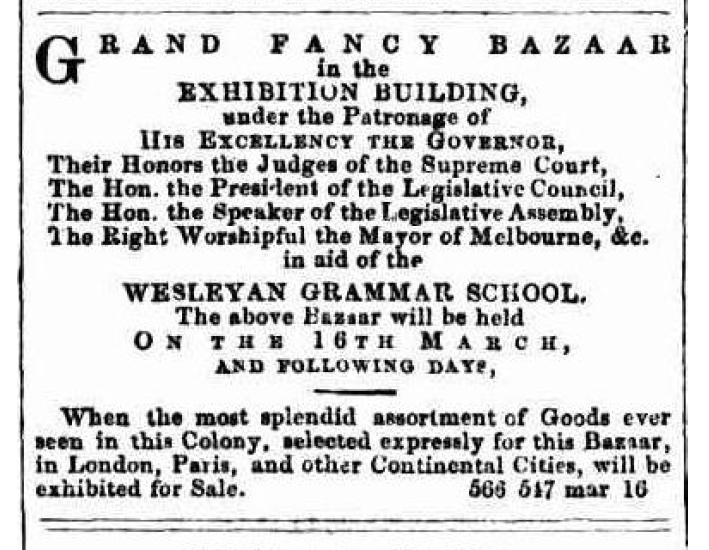
Large-scale ‘fancy bazaars’ were a popular 19th century fundraising method, combining market stalls, exhibitions, entertainment and social gatherings over several days. They were often elaborate affairs, featuring decorated booths, performances, raffles and the sale of handmade goods, clothing, artwork and produce.
The Bazaar would be hosted in the original Exhibition Building on William Street. Modelled on the opulent Crystal Palace in London, the Exhibition Building was the perfect venue to commercialise the beauty of the hand-crafted items the women had previously only showcased within their own homes.
Their husbands were not immediately convinced. Victorian propriety had clear expectations of middle- and upper-class women. They were welcome to be supportive wives, devoted mothers and active in Christian charity – the Methodist ladies were in fact well known for their hands-on ministry in the laneways behind the facades of 'Marvellous Melbourne'. But running a large-scale philanthropic event in the commercial sector? That was another matter entirely.
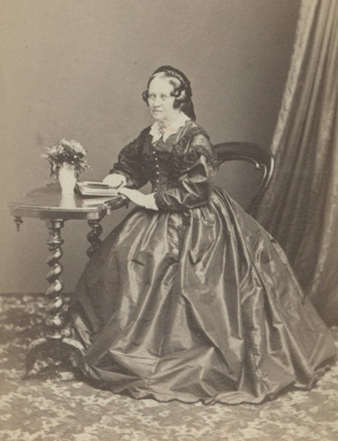
The committee of men reluctantly agreed, but made it clear such an event was unlikely to be repeated. While Elizabeth Draper and her team got to work on crafting items to sell, Anne and Walter Powell set off on a buyer’s trip to Europe to source highly coveted items to ship back to Melbourne in time for the Bazaar the following year.
Heavily pregnant for most of the trip, Anne gave birth to a son while they were in England. She may have imagined that her tiny boy would one day attend the Wesleyan school the Powells were so dedicated to financing, but sadly it was not to be. Their son died of cholera while they were sourcing goods in France.
Anne returned to Melbourne and helped run the Bazaar anyway. If that is not courage, it is hard to know what is.
Advertised in The Argus as an event 'intended to surpass any affair of the kind which had preceded it, and to be singularly rich in English, French and German fancy goods,' the ten-day Bazaar opened in March 1858 with an ambitious profit goal of £1,500 - a sum that would match Walter Powell's original donation to the College fund. The Governor attended. High-profile parliamentarians followed. Sixty female congregants had surveyed the curated collection in the weeks prior; 32 publicly committed to managing stalls.
When the glass doors of the Exhibition Building finally closed, the Grand Fancy Bazaar had raised £1,925 – the equivalent of over $200,000 today. It had exceeded its goal by nearly a third. Wesley College would become a reality.
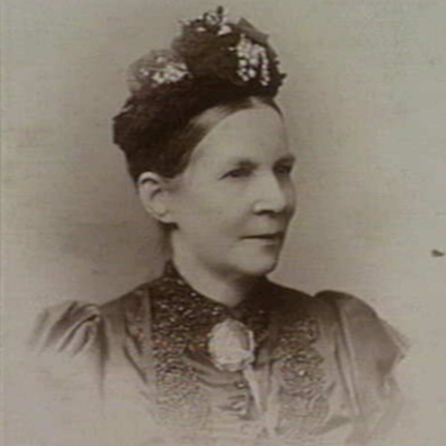
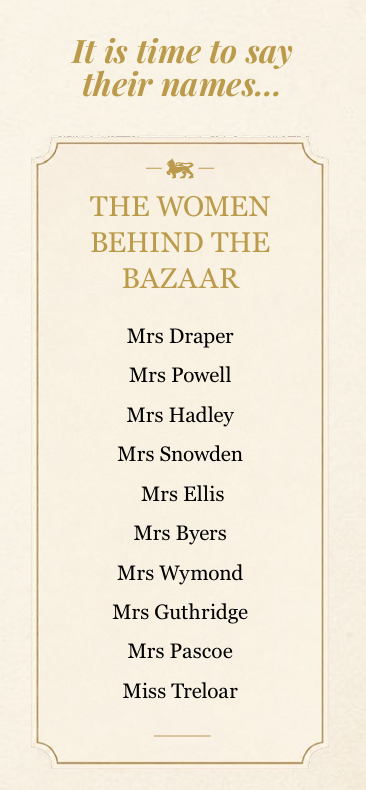
In its glowing review – ‘unquestionably the best bazaar that has been for some time’ – The Argus article named many of the women who had made it happen. Alongside the familiar names of Mrs Draper and Mrs Powell were Mrs Hadley, Mrs Snowden, Mrs Ellis, Mrs Byers, Mrs Wymond, Mrs Guthridge, Mrs Pascoe and Miss Treloar.
Wesley's motto – Dare to be Wise, has guided our community for generations. We speak often of courage – the courage to lead, to question, to act. We speak of wisdom – the wisdom to see beyond convention, to do what is right even when it is difficult. These are not abstract ideals. They have always been lived by real people, in real moments of sacrifice and daring.
Mrs Draper, Mrs Powell and the women who stood alongside them did not wait for permission to shape the future of this College. Faced with a dream that was faltering, they stepped forward. They organised, they created, they fundraised, and in doing so, they secured the school’s future. They did it with courage, with wisdom, and with a quiet determination that history has left unacknowledged for far too long.
In Wesley's 160th year, we reclaim their place in our story. These women did not simply support our founders – they were our founders. And everything Wesley stands for today, they embodied first.
Pastor Kaylea Fearn is College Chaplain at our St Kilda Road Campus