
Old Wesley Collegian Ivor Warne-Smith (OW1912) featured in this year’s Anzac Day edition of the AFL Football Record - recognising a life of extraordinary service on and off the field.
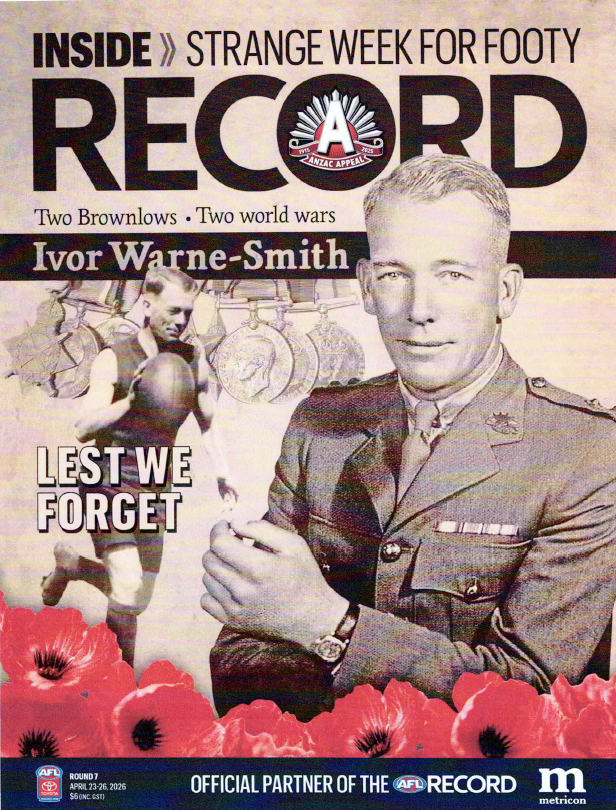 Ivor Warne-Smith was a talented footballer: the first to win two Brownlow Medals, and arguably the greatest player of the era between the two world wars in which he served. He was also a committed soldier, making a selfless nine-year contribution across both conflicts, his sense of duty so strong that he enlisted when he was too young at 17 in World War I, and too old at 42 in World War II. In every arena of his life, Ivor embodied Wesley's motto - Dare to be Wise.
Ivor attended Wesley with his three brothers – Spenser (OW1909), Waldo (OW1909) and ‘Bobs’ (OW1913) - where from 1912 to 1914, a shy Ivor - nicknamed 'lvo' and 'Smithy' - excelled in football, athletics and cricket.
Big things awaited him on the pitch, but the outbreak of WWI put all dreams on hold. He enlisted in May 1915, despite being just 17 - an act of quiet courage that set the example for older brothers Spenser and Waldo, who followed.
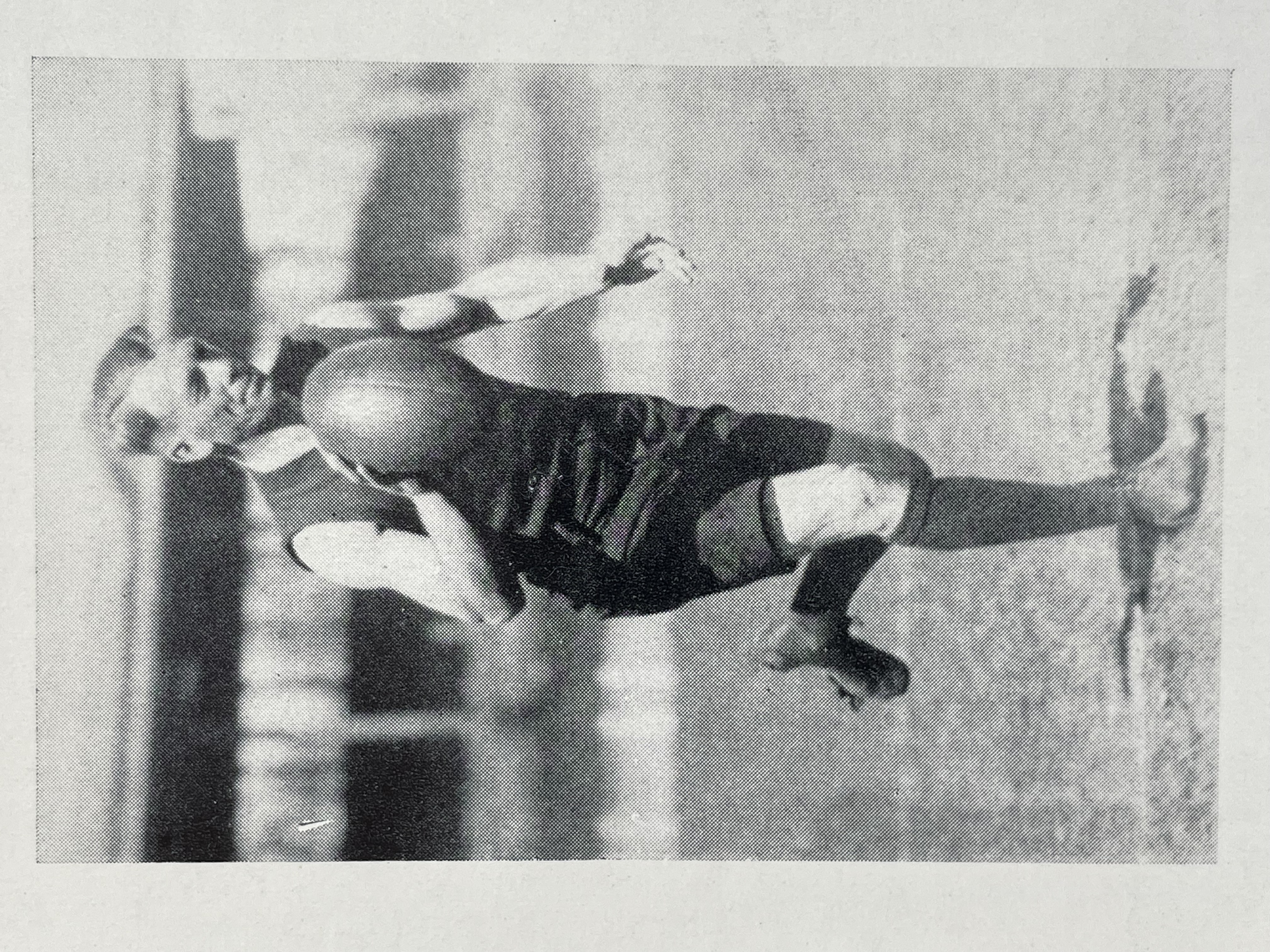 He initially served at Gallipoli, then following the mass evacuation in December 1915, was redeployed to the Western Front in France, where he served with machine-gun battalions, quickly earning promotions to corporal and then sergeant. He was a good man under pressure; as Fitzroy champion and former Wesley schoolmate Gordon Rattray (OW1912) would tell The Sporting Globe: ‘The imperturbable lvo ... was one of the coolest men I ever knew ... l never saw him rattled on the field - or off it.’
Tragically, his eldest brother Spenser was killed in action in August 1916 near the French village of Pozieres.
On the frontline in France in 1918, Ivor was gassed, and though diagnosed as a ‘mild’ case, he was sent to London for treatment and took more than two months to resume duty. The recently promoted lieutenant then received gunshot wounds to his head and right leg, and was again incapacitated for months. Just two days after he was wounded, his other brother Waldo died from wounds sustained in action at Plateau Wood in the Somme.
 Ivor returned to Melbourne at the end of hostilities and remarkably, just ten months after being shot in the head and leg, made a promising League debut with the Melbourne Football Club. Seven further appearances followed that season.
In 1920, Ivor left Victoria for an apple orchard near Latrobe in north western Tasmania where he also led the local football team and became a legend of Tasmanian footy.
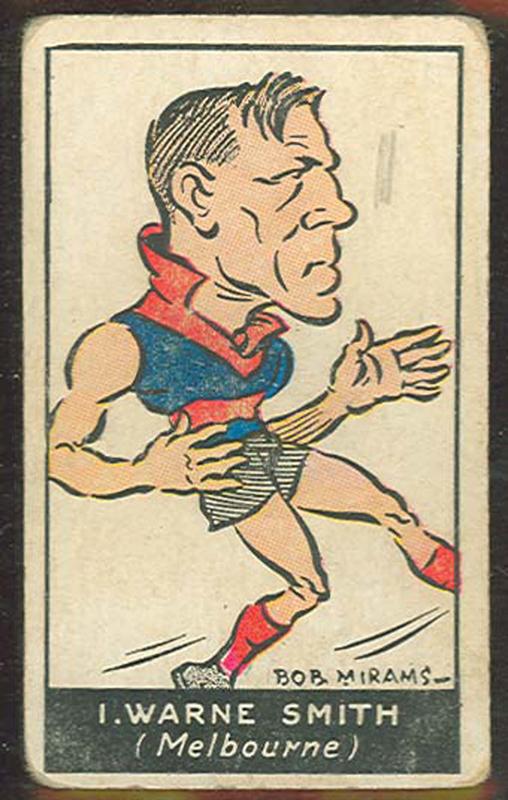
League football lured Ivor back to Melbourne in 1925, and despite being 27, he played on for eight seasons of spectacular success. This year marks the 100th anniversary of both his first Brownlow Medal and Melbourne's 1926 premiership.
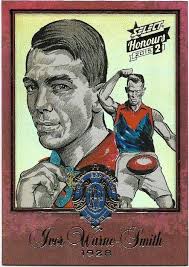
He won his second Brownlow in 1928.
After playing and coaching his last game in 1932, Ivor became an esteemed football writer, while rising up the ranks with Vacuum Oil Company, managing its Yarraville plant for decades.
 His innate sense of service was again on display in 1940 when both he and Bobs enlisted for World War II - married fathers, aged 42 and 40 respectively, answering the call without hesitation.
He served across the Middle East, New Guinea and Borneo, rising to the rank of Major - completing nine years of service across two world wars.
Returning from his second world war, Ivor served on the Melbourne Cricket Club committee and later, as the Demons’ chairman of selectors, helping guide the club to its four premierships in the 1950s.
Heart issues forced his retirement from Vacuum Oil in 1959 and claimed his life the following March. He was 62.
An Old Wesley Collegian. A footballer. A soldier. A life of service and the courage to give it fully.
Lest we forget.
Source: Ben Collins, AFL Football Record, April 23-26, 2026. Edited extracts.